Storing a Plane Outside vs Hangar — What You Actually Lose
Storing a plane outside vs hangar rental has gotten complicated with all the conflicting advice flying around pilot forums. As someone who bought a Cessna 172 and immediately defaulted to whatever storage was cheapest and available, I learned everything there is to know about this decision the hard way. Today, I will share it all with you.
The tie-down was $85 a month at a small regional field. The T-hangar waitlist was 18 months long. Seemed like a short-term fix with an obvious exit. Three years later — crazing on the windshield, a pitot tube that had been nested in twice by wasps, and a paint quote that made me physically sit down. So yes. Probably should have opened with this section, honestly.
Here’s what outside storage actually does to an airplane over time, where the real costs pile up, and how to think through the decision without lying to yourself — including the cases where tie-down is genuinely fine.
What Outside Tie-Down Storage Actually Does to Your Plane Over Time
The damage isn’t dramatic. It’s slow and cumulative — which is exactly what makes it expensive.
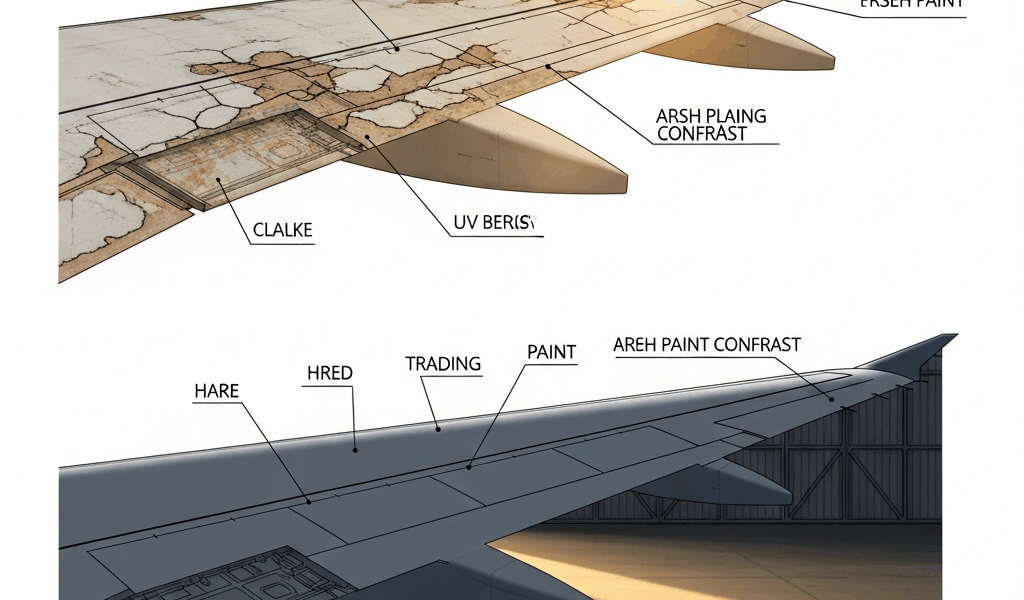
UV exposure starts working on your airplane almost immediately. On composite aircraft — your Cirrus SR20, your Piper Archer with fiberglass cowling, your Diamond DA40 — gelcoat and paint begin breaking down within 18 months of consistent sun exposure in southern climates. By year three, you’re looking at oxidation, fading, and micro-cracking that needs professional paint correction rather than a simple polish. Polycarbonate windshields develop crazing — that fine network of surface cracks — that impairs visibility and can’t be buffed out. Replacement for a 172 windshield runs $800 to $1,400 installed, depending on your shop.
Metal aircraft fare better on the airframe. But the cowling plastics, wheel fairings, and interior still degrade on roughly the same timeline. Rubber door seals and control surface hinge seals dry out and crack. Temperature cycling — 95°F on the ramp in July, 28°F in January — accelerates this across every elastomer in the aircraft. That’s just physics.
Moisture intrusion into avionics is the damage pilots underestimate most. Dew cycles and morning condensation find their way into pitot-static systems, transponder connectors, and nav/com wiring over time. I’m apparently more obsessive about avionics bays than most pilots, and talking to A&Ps confirmed what I suspected — they can identify an outdoor-stored aircraft within 30 seconds of opening the avionics bay. Not dramatically failed. Just… tired-looking. Corroded pin connectors. Green tinge on terminal blocks. Don’t make my mistake of treating avionics like they’re sealed from the elements.
Then there’s wildlife. Pitot tubes are prime nesting real estate for wasps and mud daubers. A $12 pitot cover from Aircraft Spruce prevents this entirely. Most pilots don’t use one consistently — I was one of those pilots until year two. Rodents will chew through control cable jacketing, fuel line insulation, and air filter housings. They access tie-down aircraft through wheel well openings and cowling gaps with zero resistance. Finding chewed wiring at annual inspection is a very bad day. That was my 2019 annual, and I still think about it.
The Real Cost Gap Between Tie-Down Fees and Hangar Rent
But what is the actual financial picture here? In essence, it’s a monthly fee comparison that almost everyone gets wrong. But it’s much more than that.
Tie-down fees nationally run roughly $50 to $150 per month for single-engine piston aircraft. Most pilots pay somewhere in the $75 to $100 range. T-hangars typically start at $175 to $250 per month in smaller markets and climb to $400 to $600 or higher near metro areas. Box hangars cost more. That gap feels significant — $100 to $300 per month is real money across a full year.
Here’s where the math shifts. Layer in the costs that outside storage generates — costs that hangar storage largely prevents:
- Paint touch-up and oxidation treatment — $200 to $600 every 2 to 3 years for a maintained aircraft, more if you defer it
- Windshield replacement from crazing — $800 to $1,400 on a typical single-engine
- Seal replacement on control surfaces and doors — $300 to $700 at annual
- Pitot tube cleaning and inspection after nesting — $150 to $400 depending on what the daubers got into
- Avionics connector cleaning and corrosion treatment — variable, but $200 to $500 if caught early
- Annual inspection findings that are directly weather-related — hard to isolate, but experienced A&Ps estimate 20 to 30% more squawks on consistently outdoor-stored aircraft
Spread across three to five years, the actual cost gap between a $90/month tie-down and a $250/month T-hangar narrows considerably. In some cases — particularly composite aircraft in high-UV climates like Texas, Arizona, or Florida — the lifetime cost of outdoor storage genuinely exceeds hangar rental. I ran those numbers myself after year three. The spreadsheet was not fun to look at.
Where Outside Storage Actually Works Fine
Credit where it’s due: plenty of aircraft live outside for years without significant problems. Context matters enormously here.
Dry, low-humidity climates are genuinely different environments. An aluminum Cessna 172 tied down in Albuquerque or Prescott, flown consistently every week or two, and covered with a quality aircraft cover — something like a Kimberly-Clark Protekt cover with reinforced tie-downs, around $180 to $220 depending on model — can do quite well. Low humidity means less moisture intrusion. Moderate UV is manageable with periodic waxing. Regular flying means the engine stays lubricated, control surfaces get exercised, and you actually catch problems before they compound.
Fabric aircraft are generally more vulnerable outdoors. Composites in humid southern climates are next. Metal airframes with factory paint in solid condition and active flying schedules handle outdoor storage the most gracefully — at least if the climate cooperates.
Frequency of flight is probably the biggest factor nobody discusses honestly. A plane that flies twice a week is in far better shape than one sitting in a tie-down for three weeks at a stretch. Sitting is what kills outdoor-stored aircraft. That’s what makes regular flying endearing to us budget-conscious owners — it’s also just good maintenance practice.
What a Hangar Actually Protects — and What It Doesn’t
So, without further ado, let’s dive into what hangar storage genuinely solves and where pilots overestimate its benefits.
A hangar reliably protects against hail damage — a single hail event can total an aircraft or generate $20,000 in repairs. It also handles UV degradation, bird and rodent access through major openings, frost accumulation on wings before flight, and the chronic moisture cycling that wears out seals and connectors over time. These are not small things. A single hailstorm that catches your aircraft on a tie-down can cost more than five years of hangar rent.
What a hangar doesn’t automatically solve is worth knowing. Unheated hangars in cold climates still cycle through condensation. A metal hangar that goes from 15°F overnight to 50°F during the day generates moisture inside the aircraft — sometimes more than a tie-down would see, because the hangar holds humidity differently than open air. Rural airport hangars often have worse rodent problems than tie-downs. The building gives rodents shelter too. I’m apparently unlucky with rural hangars specifically, and two separate A&Ps have confirmed this isn’t just me.
Coastal hangars with poor ventilation can actually accelerate corrosion. Salt air trapped in an unventilated box hangar does more damage than open-air storage in some cases. A heated, climate-controlled hangar is the gold standard — but that’s not what most pilots have access to or can realistically afford.
How to Decide Based on Your Aircraft and Airport
First, you should run through four questions before committing to either option — at least if you want to make a decision you won’t quietly regret at the next annual.
- What’s your airframe construction? Composite aircraft in high-UV or high-humidity climates need hangar storage more urgently than metal aircraft in dry regions. Full stop.
- What’s your local climate? Hail risk, humidity, and UV index all factor in. The Midwest hail belt is genuinely dangerous for outdoor storage. The high desert Southwest is not. These are different decisions.
- How often do you fly? Weekly flying with proper covers and consistent attention is manageable outside. A plane sitting for weeks at a stretch deteriorates significantly faster outdoors — that’s not an opinion, it’s what annuals reveal year after year.
- What’s actually available at your airport? A waitlist hangar you’ll get in 18 months is worth getting on today. A $400/month box hangar when you only fly 40 hours a year might not pencil out regardless of the degradation math.
Hangar availability varies wildly — even within the same metro area — and most pilots don’t realize how many options exist at nearby fields within a reasonable drive. Checking what’s available at every airport within range of your home base is the actual first step, not a monthly fee comparison. Tools like HangarFinder exist specifically to surface that inventory across airports. Worth 10 minutes before you default to whatever the home field offers.
The tie-down vs hangar decision isn’t always obvious. But it deserves more than a shrug and a quick fee comparison. Your airplane’s long-term condition — and your maintenance budget — depend on getting it right.



Stay in the loop
Get the latest aircraft hangar finder updates delivered to your inbox.