
Hangar hunting has gotten complicated with all the waitlists and inflated prices flying around. As someone who spent way too long waiting for hangar space and learned the hard way what actually matters, I learned everything there is to know about aircraft storage options. Today I’ll share what every pilot and investor should understand about these essential structures.
The hangar shortage of 2025-2026 has driven rental rates up 40% at some airports and created a secondary market where hangar access rights sell for six figures. Here’s everything you actually need to know.
What Is a Hangar?
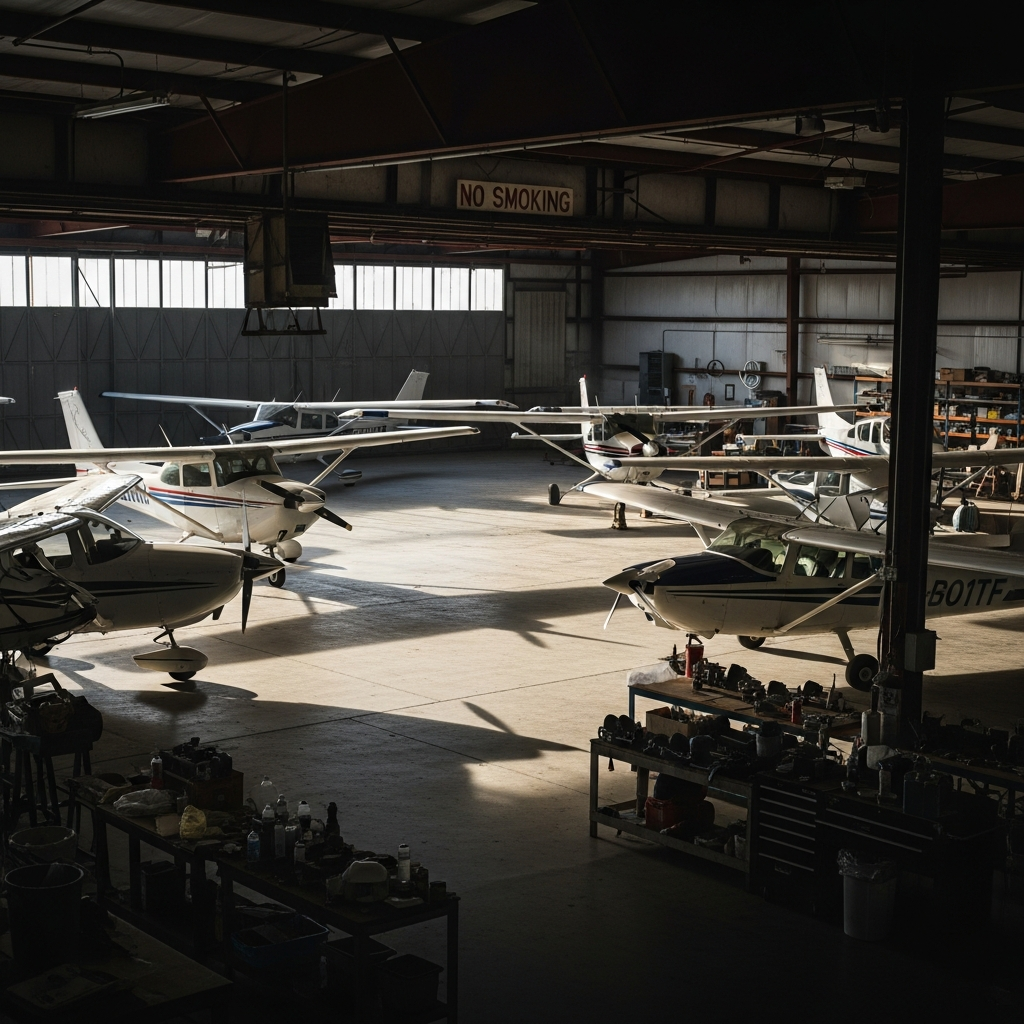
A hangar is a closed structure designed to hold aircraft for storage, maintenance, assembly, or protection from weather. The term derives from the French word for “shed,” though modern hangars have evolved far beyond simple storage buildings.
Hangars serve several critical functions:
- Weather Protection: Shield aircraft from sun, rain, snow, hail, and temperature extremes
- Security: Prevent theft, vandalism, and unauthorized access
- Maintenance: Provide controlled environments for repairs and inspections
- Preservation: Extend aircraft lifespan by reducing exposure to elements
Types of Hangars
T-Hangars
Named for their T-shaped footprint when viewed from above, T-hangars are the most common type at general aviation airports. Each unit typically houses one single-engine aircraft with wings extended.
- Size: Generally 35-42 feet wide, 32-40 feet deep
- Cost: $300-$800/month rental; $50,000-$150,000 to build
- Best for: Single-engine piston aircraft, light sport aircraft
Box Hangars (Conventional)
Simple rectangular structures, either standalone or in rows. More flexible than T-hangars for oddly-shaped aircraft or those requiring wing folding.
- Size: Highly variable, from 40×40 feet to warehouse-scale
- Cost: $500-$2,000/month rental; $80,000-$500,000 to build
- Best for: Multi-engine aircraft, helicopters, multiple aircraft storage
Corporate/Executive Hangars
Large facilities designed for business jets, often including office space, conference rooms, crew lounges, and full maintenance capabilities.
- Size: 10,000-100,000+ square feet
- Cost: $10,000-$100,000+/month; multi-million dollar construction
- Best for: Corporate flight departments, charter operators, FBOs
Maintenance Hangars
Purpose-built facilities for aircraft repair operations. Feature overhead cranes, specialized flooring, paint booths, and environmental controls.
- Features: Reinforced floors, fire suppression, ventilation systems
- Regulations: Must meet FAA Part 145 repair station requirements
Military Hangars
Hardened structures designed to protect military aircraft. May include blast-resistant construction, nuclear/biological/chemical protection, and camouflage features.
Hangar Construction Methods
Steel Frame
The most common construction method. Pre-engineered metal buildings dominate new construction due to cost efficiency and clear-span capability.
Fabric/Tensile Structures
Increasingly popular for temporary or semi-permanent installations. Modern fabric hangars can withstand significant weather and offer lower costs than steel.
Concrete/Masonry
Used for permanent installations requiring maximum durability or specific aesthetics. Common at military bases and established FBOs.
Hangar Door Systems
Probably should have led with this section—the door represents one of the most critical and expensive components:
Bi-Fold Doors
Sections fold upward and outward, creating a canopy that provides shade. Most common on T-hangars and smaller box hangars.
Sliding Doors
Track-mounted panels slide horizontally. Preferred for large openings where bi-fold doors would be impractical.
Rolling/Sectional Doors
Similar to industrial overhead doors. Compact but limited in maximum width.
Stacking Doors
Multiple panels slide and stack to one side. Allows very wide openings while minimizing door storage footprint.
The 2026 Hangar Shortage
Several factors have created unprecedented demand:
Post-Pandemic Aviation Boom
Private aircraft sales surged during 2020-2022 and haven’t meaningfully declined. Every new aircraft sale creates hangar demand.
Infrastructure Lag
New construction takes 12-24 months and requires airport authority approval. Supply cannot quickly respond to demand spikes.
Electric Aircraft Transition
Emerging electric aircraft often require climate-controlled storage for battery health, adding demand from aircraft that might otherwise tie down outside.
Insurance Requirements
That’s what makes hangar access critical for many pilots—insurance policies now often mandate hangar storage, particularly for aircraft valued over $200,000. Tie-down storage can void coverage.
Finding Hangar Space
For pilots seeking availability:
- Contact airport management directly: Many airports maintain waitlists
- Check FBO offerings: Fixed-base operators often have premium options
- Explore nearby airports: Secondary fields may have availability
- Consider hangar sharing: Split costs with compatible aircraft owners
- Use hangar finder services: Online platforms aggregate availability nationwide
Hangar Investment Opportunity
The shortage has created investment interest:
- Cap rates often exceed 8-10% at well-located airports
- Ground lease terms typically run 20-40 years with renewal options
- Appreciation potential as aviation continues growing
- Tax benefits through depreciation and business deductions
However, investors should understand risks including airport closure possibility, ground lease termination clauses, and the specialized nature of hangar assets.
The Bottom Line
Hangars represent critical infrastructure that’s become increasingly valuable as private flying expands. Whether you’re a pilot seeking storage, an investor evaluating opportunities, or simply curious about aviation, understanding hangars provides insight into an industry undergoing significant transformation.
The current shortage shows no signs of easing—making hangar access one of the most valuable assets in general aviation today.
Hangar availability and pricing vary significantly by location. Contact local airport authorities or Fixed Base Operators for current information in your area.




Stay in the loop
Get the latest wildlife research and conservation news delivered to your inbox.