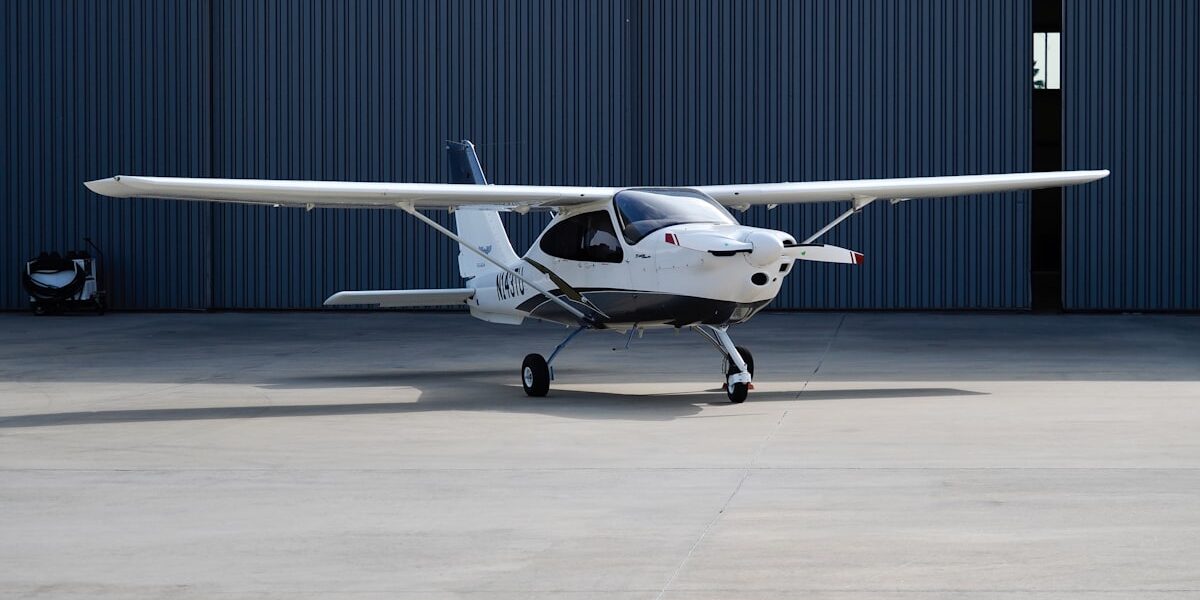
Your hangar door is the largest moving component and most visible feature of your hangar. Door selection affects daily convenience, security, interior climate, and overall hangar functionality. Understanding the options helps you choose—or evaluate existing doors when renting.
Bi-Fold Doors
How They Work
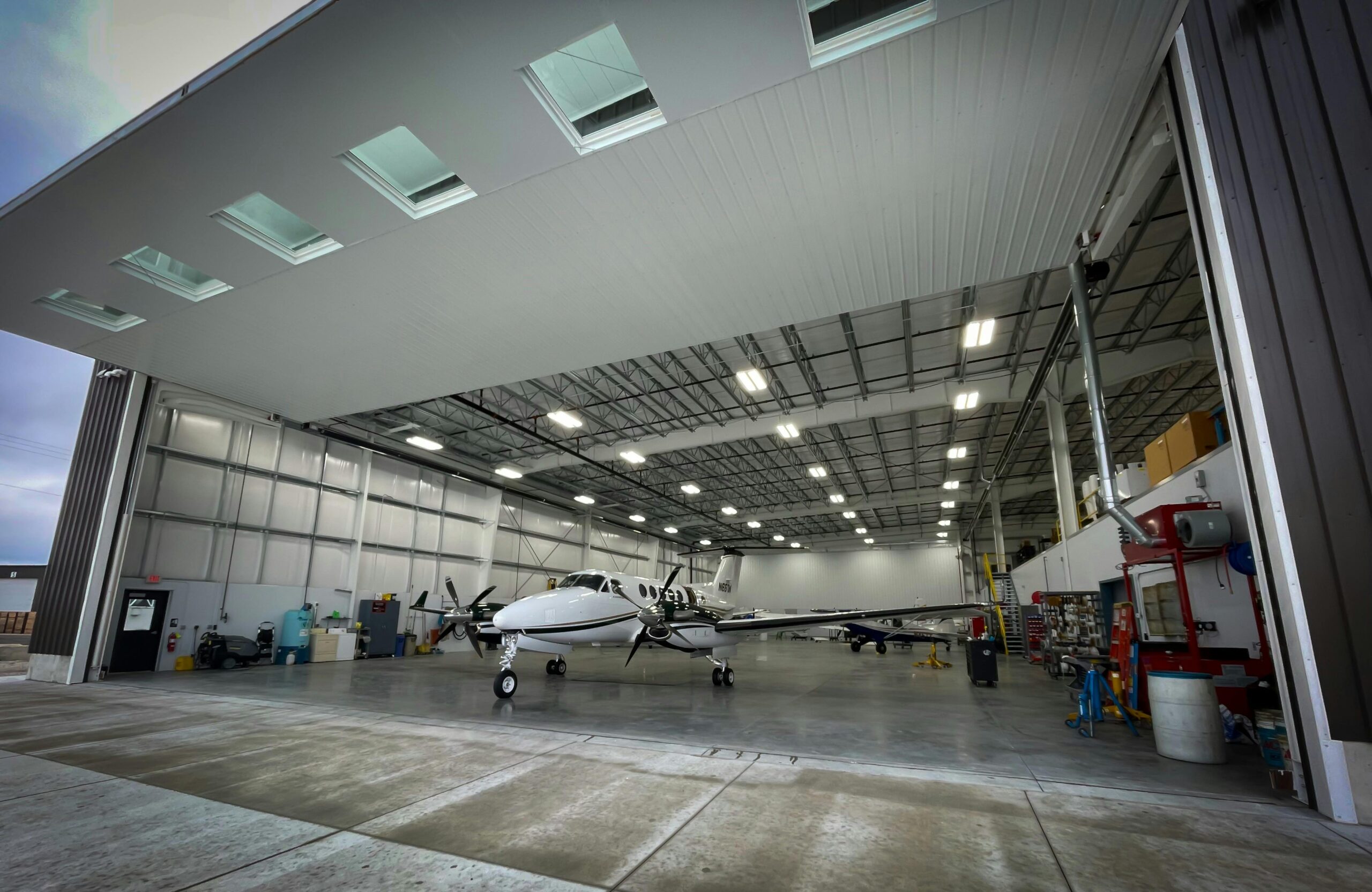
Bi-fold doors hinge in the middle, folding upward and outward when opened. Electric or hydraulic systems lift the heavy door sections, and they rest in the raised position during aircraft movement.
Advantages
- Clear opening with no tracks on the floor
- Good sealing when closed
- Professional appearance
- Proven reliability
Considerations
- Cannot be partially opened
- Requires space in front of hangar when open
- Higher maintenance than some alternatives
- Wind sensitivity when open
Sliding Doors
How They Work
Sliding doors roll horizontally on tracks, stacking at one or both ends of the opening. Can be manual or motorized.
Advantages
- Partial opening possible for ventilation or small aircraft
- No exterior projection when open
- Simple, reliable mechanism
- Lower maintenance requirements
Considerations
- Requires wall space for door storage when open
- Floor tracks collect debris
- May not seal as well as bi-fold
- Multiple panels reduce clear opening width
Rolling Steel Doors
How They Work
Similar to commercial warehouse doors, these roll up into a coil above the opening. Usually motorized for large hangar applications.
Advantages
- Compact when open—no floor or wall space needed
- Good weather sealing
- Secure when locked
- Fast operation
Considerations
- Cannot be partially opened on most designs
- Industrial appearance may not suit all settings
- Coil mechanism requires headroom
- Panel damage affects entire door operation
Stacking Doors
How They Work
Multiple horizontal sections stack vertically overhead, similar to a garage door but designed for larger openings.
Advantages
- Can be partially opened
- No floor tracks or exterior projection
- Good sealing characteristics
Considerations
- Requires substantial headroom for stacking
- More complex mechanism than simple sliders
- Higher cost for large openings
One-Piece Tilt Doors
How They Work
The entire door tilts outward at the bottom then slides back into the hangar along ceiling-mounted tracks.
Advantages
- Simple design with few moving parts
- Full opening width available
- Economical for smaller hangars
Considerations
- Requires clearance in front during opening
- Takes ceiling space when open
- Limited to smaller openings
Selection Factors
Opening Size Requirements
Calculate required clear width and height based on your aircraft wingspan plus comfortable clearance margins. Consider future aircraft that might use the hangar.
Wind Conditions
Some door types perform better in high wind locations. Consider both closed (wind loading) and open (stability) conditions.
Operation Frequency
Frequently used doors benefit from motorization. Consider duty cycle ratings for heavy use applications.
Budget
Door systems range from basic manual sliders to sophisticated motorized bi-folds. Balance initial cost against operational convenience and long-term maintenance.
Maintenance Considerations
All door types require periodic maintenance:
- Track cleaning and lubrication
- Seal inspection and replacement
- Motor and controller service
- Hardware inspection and tightening
Your hangar door choice impacts daily operations significantly. Evaluate options carefully based on your specific hangar configuration, aircraft requirements, and usage patterns.



Stay in the loop
Get the latest wildlife research and conservation news delivered to your inbox.