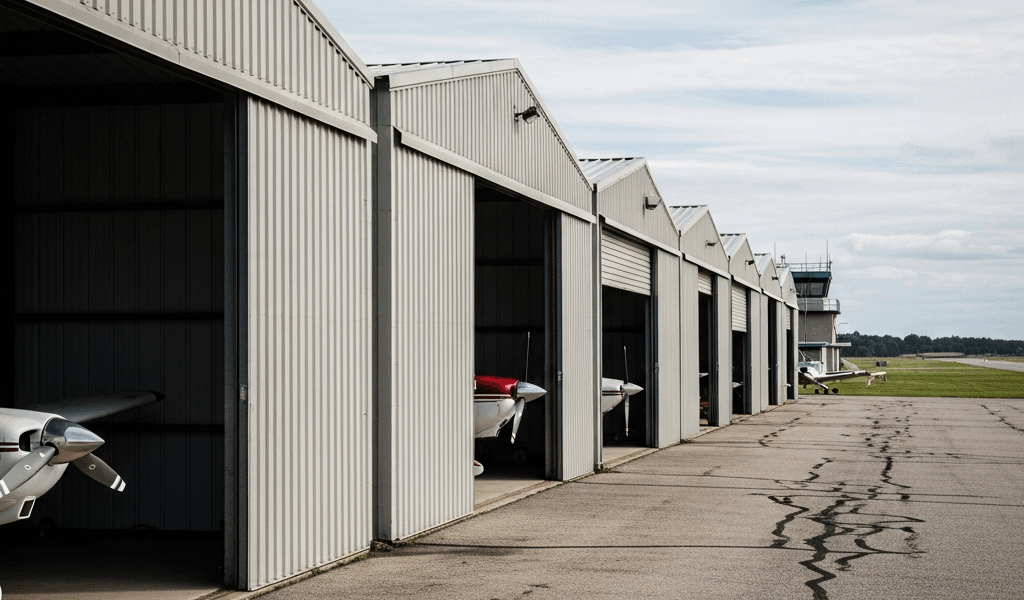
Hangar space in 2026 is tight. If you’ve been looking for a spot for your aircraft, you already know the waitlists are long and the prices have climbed. But affordable hangar space does exist if you know where to look and how to approach the search strategically.
Look Beyond Your Home Airport
The airports with the longest hangar waitlists are usually the busiest towered fields near metro areas. That’s where everyone wants to be, which is exactly why availability is nonexistent. Expand your search radius to smaller non-towered airports within 30-45 minutes of driving distance.
Municipal airports in smaller towns often have hangar space available at significantly lower rates. A 30-minute drive to your airplane is a small trade-off for saving thousands per year on rent and actually having a hangar instead of sitting on a five-year waitlist.
Talk to Airport Managers Directly
Online hangar listing sites catch maybe 30% of available space. The rest is found through direct relationships. Call or visit the airport manager at every airport within your search radius. Introduce yourself, explain what you’re looking for, and ask to be put on their list. Many airport managers keep informal lists and call people when space opens up — but only people they’ve actually spoken to.
Visit in person if you can. Airport managers are more likely to remember a face than an email. Bring a business card. Ask about upcoming vacancies — sometimes they know a tenant is planning to leave months before the space officially opens up.
Consider T-Hangars Over Box Hangars
If you’re flying a single-engine piston aircraft, a T-hangar is usually the most cost-effective option. Box hangars and conventional hangars are great but command premium prices. T-hangars are purpose-built for individual small aircraft and their rents reflect that narrower use case. Yes, the space is tighter and you won’t be doing major maintenance inside, but your airplane is out of the weather and that’s the primary goal.
Shared Hangar Arrangements
If you can’t find solo hangar space, a shared arrangement might get you indoors sooner. Two aircraft can share a larger hangar if the dimensions work. The logistics require clear agreements about access, scheduling, and insurance, but splitting a $600/month hangar is better than paying $300/month to sit on a tiedown while the paint fades.
Post on your airport’s bulletin board and on aviation forums like Beechtalk, VAF, or your local pilots association. Shared hangar arrangements are common and most pilots who’ve done it say it works fine with the right co-tenant.
Build Your Own
At some airports, you can lease land and build your own hangar. This requires capital upfront but often makes financial sense over a 10-15 year period compared to renting. Monthly ground lease rates are typically much lower than finished hangar rent, and you end up with a structure you control.
Check with the airport authority about available lots, building requirements, and lease terms. Some airports have specific plans and designs you must follow. Others give you more flexibility. The permitting process varies widely — some airports make it straightforward while others involve months of bureaucracy.
Negotiate Tiedown-to-Hangar Transitions
If you’re currently on a tiedown at your home airport, make sure the FBO and airport manager know you want hangar space. At many airports, current tenants — even tiedown tenants — get priority when hangar space opens up. Pay your tiedown rent on time, be a good airport citizen, and make your interest in a hangar known. When a spot opens, being a known, reliable tenant often bumps you ahead of outside inquiries.
Hangar hunting takes patience, but the combination of expanding your search area, building direct relationships with airport managers, and being flexible on the type of space will get you indoors faster than just adding your name to one waitlist and hoping.




Stay in the loop
Get the latest aircraft hangar finder updates delivered to your inbox.